
Pipeline Pigs
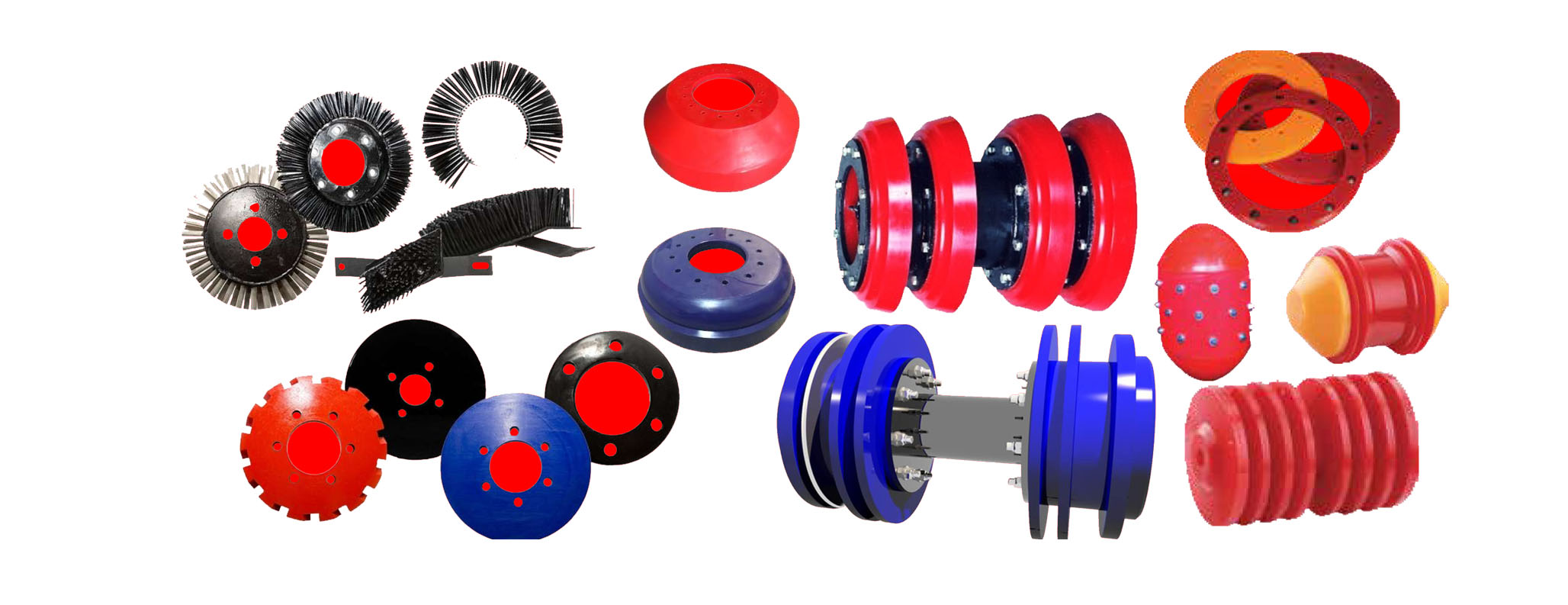
A pipe cleaning pig is a specialized device inserted into pipelines to remove debris, sludge, wax, and scale, ensuring optimal flow and structural integrity. Propelled by product pressure or flow, these tools act like a squeegee against inner pipe walls. They are commonly used in oil, gas, and water industries, with types including foam, solid-cast polyurethane, and brush pigs.
Aditya Steel Engg. Co. is one of the high quality pipeline pigs manufacturer and suppliers in India, Our pigs include pipeline cleaning pigs, pipeline inspection pigs and gauging pigs.
How Pipeline Pigging Works
The process typically follows these steps:
- Launching: The pig is inserted into a pig launcher (or launching station), an oversized section of the pipe.
- Propulsion: Pressure from the fluid (oil, gas, water) or an external medium (compressed air, nitrogen) pushes the pig through the line.
- Action: As it moves, the pig’s cups, discs, or brushes scrape the internal walls to remove debris like wax, scale, or sludge.
- Receiving: The pig is captured at a pig receiver (pig catcher) at the end of the run, where it is removed along with the collected waste.
Key Aspects of Pipe Cleaning Pigs:
- Purpose: They clean, scrape, dewater, and separate products within pipelines.
- Types:
- Foam Pigs: Flexible, used for drying, cleaning, and batching.
- Solid-Cast Pigs: Durable polyurethane for efficient sealing and cleaning.
- Brush Pigs: Equipped with steel or nylon brushes for heavy deposits, rust, and scale removal.
- Bi-directional Pigs: Capable of moving in both directions, often used for complex cleaning tasks.
- Operation: Pigs are loaded into a “launcher” and retrieved at a “receiver“. They can also be equipped with magnets to remove ferrous debris.
- Applications: Oil and gas pipelines, industrial piping, and cleaning of new pipelines
Key Benefits :
- Efficiency: Restores flow rates by clearing obstructions.
- Corrosion Prevention: Removes moisture and corrosive agents that settle in the pipe.
- Product Integrity: Prevents cross-contamination by separating different batches of products.
- Cost Savings: Identifies early defects, reducing the risk of major leaks or unplanned shutdowns.
Material Spec. :
The material specifications for pipeline pigs depend on the pig’s type—whether it is a solid cast, foam, or mandrel (steel-body) pig—and the specific operating conditions of the pipeline, such as temperature, pressure, and chemical exposure.
1. Primary Materials.
- Polyurethane (PU): The most common material due to its high abrasion resistance, flexibility, and chemical durability.
- Durometer Hardness: Typically ranges from 60 Shore A (very soft/flexible) to 95 Shore A (hard/rigid).
- Polyester vs. Polyether: Polyester-based PU offers better hydrocarbon and physical resistance, while Polyether-based PU is preferred for high-moisture or water-rich environments due to superior hydrolysis resistance.
- Foam: Used for lightweight cleaning and batching.
- Density: Varies from low (2–3 lbs/ft³) for light drying to ultra-high (12–14 lbs/ft³) for aggressive descaling.
- Metals: Mandrel (mechanical) pigs use a central steel body, typically made of Carbon Steel (e.g., ASTM A36) or Stainless Steel (e.g., ASTM A240 TP304/316) for corrosive or “sour” service.
2. Component Specifications
- Sealing Discs & Cups: Usually PU with hardness tailored to the task:
- Sealing Discs: ~65–75 Shore A for flexibility and tight sealing.
- Guide Discs: ~85–90 Shore A for rigid support.
- Cleaning Elements:
- Brushes: High-grade tinned steel, stainless steel, or nylon. Braided steel is used for heavy-duty scraping.
- Abrasives: Silicon carbide pastes or hardened steel pins can be embedded in foam pigs for descaling.
- Seals & Gaskets: For internal components, materials like Nitrile (NBR), Fluorocarbon (FKM), or EPDM are used based on chemical compatibility.
3. Operational Limits.
- Temperature: Standard pigs operate between -20°C and 100°C (-4°F to 212°F), though specialized materials can reach up to 200°C.
- Pressure: Cleaning pigs are typically rated for pressures up to 1,000–1,500 psi, while some smart pigs can withstand up to 10,000 psi.
- Sizing: Most pigs are designed with an interference fit, meaning their outer diameter is roughly 2–5% larger (and up to 10% for some foam types) than the pipeline’s internal bore to ensure a tight seal.
4. Relevant Standards.
- ASME: Section VIII (Pressure Vessels) and Section II (Materials).
- ASTM: D3574 (Foam properties), D2000 (Rubber classifications), and A36/A240 (Steel).
- NACE MR0175: Essential for materials used in “sour” service (H₂S environments) to prevent cracking
OUR MAIN MANUFACTURING, FABRICATION AND EXPORT COUNTRIES:
- ASIA – India, Japan, Thailand, Singapore, Sri lanka, Bangladesh, South Korea, Indonesia, Philippines, Vietnam, Kazakhstan, Azerbaijan, Turkmenistan.
- Middle East – Kuwait, Dubai, Saudi Arabia, Qatar, Oman, Bahrain, Jordan, Turkey, Iraq, Yemen, Syria, Azerbaijan, United Arab Emirates, Israel.
- Western Europe – Germany, France, Netherlands, Belgium, Austria, Switzerland, Luxembourg, Monaco, Liechtenstein
- Eastern Europe – Russia, Ukraine, Poland, Romania, Czechia, Hungary,Belarus, Bulgaria, Slovakia, Moldova
- Northern Europe – United Kingdom, Sweden, Denmark, Finland, Norway, Ireland, Lithuania, Latvia, Estonia, Iceland, Isle of Man, Faeroe Islands
- Southern Europe – Italy, Spain, Greece, Portugal, Serbia, Croatia, Bosnia and Herzegovina, Albania, North Macedonia, Slovenia, Montenegro, Malta, Andorra, Gibraltar, San Marino, Holy See
- South America – Argentina, Chile, Brazil, Colombia, Paraguay
- Western Africa – Nigeria, Ghana, Côte dIvoire, Niger,Burkina Faso, Mali, Senegal, Guinea, Benin, Togo, Sierra Leone, Liberia, Mauritania, Gambia, Guinea-Bissau, Cabo Verde, Saint Helena
- Northern Africa – Egypt, Sudan, Algeria, Morocco, Tunisia, Libya, Western Sahara
- Southern Africa – South Africa, Namibia, Botswana,Lesotho, Swaziland
- Eastern Africa – Ethiopia, Tanzania, Kenya, Uganda,Mozambique, Madagascar, Malawi, Zambia, Zimbabwe, South Sudan, Rwanda, Burundi, Somalia, Eritrea, Mauritius, Djibouti, Réunion, Comoros, Mayotte, Seychelles